UNIST site map
- Admissions
-
Academics
- Colleges and Schools
-
Academic Affairs
- Academic Calendar
- Academic Curriculum
- Requirements for Graduation
- Browse Open Courses
- Undergraduate Administration
-
Graduate Academic Affairs
- Tuition Fee Payment
- Academic Leave of Absence/ Academic Return
- Voluntary Withdrawal/ Expulsion
- Change of Major
- Change of Degree Program/ Dropping of Degree Program
- Class Period/ Attendance Period/ Academic Year・Semester
- Course Registration
- Course Drop
- Attendance/ Grade/ Exam
- Credit Transfer/ Credit Carryover
- Academic Forms
- Education Support
-
Research/Industry
- Research Aims
- Research Findings
- Researcher Search
-
Research Organizations
- UNIST Multi-Interdisciplinary Institute
- IBS Research Groups
-
UNIST Labs
- Department of Mechanical Engineering
- School of Energy and Chemical Engineering
- Department of Civil
- Department of Materials Science and Engineering
- Department of Nuclear Engineering
- Department of Industrial Engineering
- Department of Design
- Department of Biomedical Engineering
- Department of Biological Sciences
- Department of Electrical Engineering
- Department of Computer Science and Engineering
- Department of Mathematical Sciences
- Department of Chemistry
- Department of Physics
- School of Business Administration
- Graduate School of Carbon Neutrality
- Graduate School of Artificial Intelligence
- Research Support
- University-Industry Relations
- Campus Life
- News Center
- About UNIST
-
etc
- UNIST Bulletin
- Work-Life Balance Support System
- UNIST Gender Equality Plan
- Faculty Invitation for Tenure Track
- Faculty Invitation for Non-Tenure Track
- Board Meeting Minutes
- University Council Meeting Minutes
- Administrative Service Charter
- Privacy Policy
- Copyright Policy
- Rejection of Unauthorized Email Collection
- Operation and Management Policy for Video Information Processing Devices
- Information Disclosure


Connection Points of Knowledge, Everything About UNIST
Try searching.
Recommended search terms


- portal
- U Academics Innovation Center
- Leadership Center
- Dormitory
- Academic Information Center
- International Students Support
- Browse Open Courses
- Course Registration
- Graduation Requirements for Graduation
- Academic Leave of Absence/ Academic Return
- Military Service
- Certificate Issuance
- Academic Calendar
- Scholarships
- Campus Map
- Campus Life Guidebook
- Health Care Center
- Human Rights Center
- portal
- Job Opening
- Announcement for Bid
- UNIST AI Services
- UNIST Daycare Center
- Sports Center
- UI Downloads
- Announcement
- Recruitment of Professors (Non-tenure)
- Faculty Invitation for Tenure Track
- UNIST Academic Information Center
- Office of Research Facilities and Training
- Office of Research Affairs
- Rule Management System
- Academic Calendar


This is a collection of menus necessary for UNIST students .
students
- portal
- U Academics Innovation Center
- Leadership Center
- Dormitory
- Academic Information Center
- International Students Support
- Browse Open Courses
- Course Registration
- Graduation Requirements for Graduation
- Academic Leave of Absence/ Academic Return
- Military Service
- Certificate Issuance
- Academic Calendar
- Scholarships
- Campus Map
- Campus Life Guidebook
- Health Care Center
- Human Rights Center


This is a collection of menus necessary for prospective UNIST Students .
prospective Students


This is a collection of menus necessary for UNIST Faculty & Staff .
Faculty & Staff
- portal
- Job Opening
- Announcement for Bid
- UNIST AI Services
- UNIST Daycare Center
- Sports Center
- UI Downloads
- Announcement
- Recruitment of Professors (Non-tenure)
- Faculty Invitation for Tenure Track
- UNIST Academic Information Center
- Office of Research Facilities and Training
- Office of Research Affairs
- Rule Management System
- Academic Calendar


NEWS CENTER
Discover not only Research Findings and event news, but also the diverse facets of UNIST presented by reporters and writers.
News Center

UNIST News
New Insights Reveal How PM2.5 Weakens Cerebrovascular Function and Impacts Brain Health
The findings of this research have been published online in the J. Hazard. Mater. on January 27, 2026.
- Research
- JooHyeon Heo
- 2026.03.18
- 2588
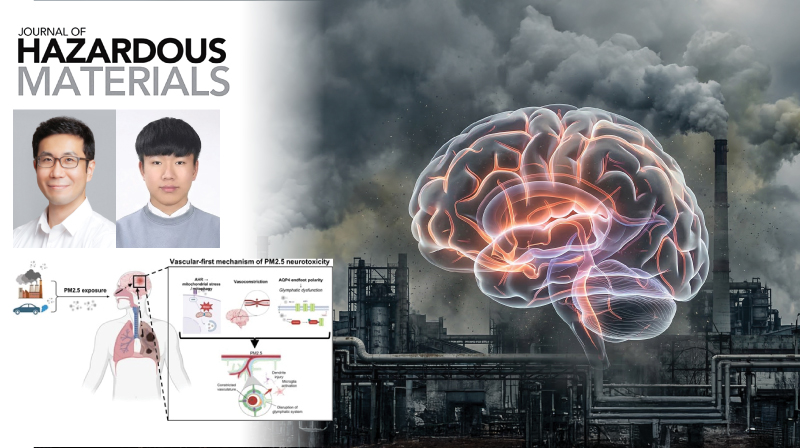
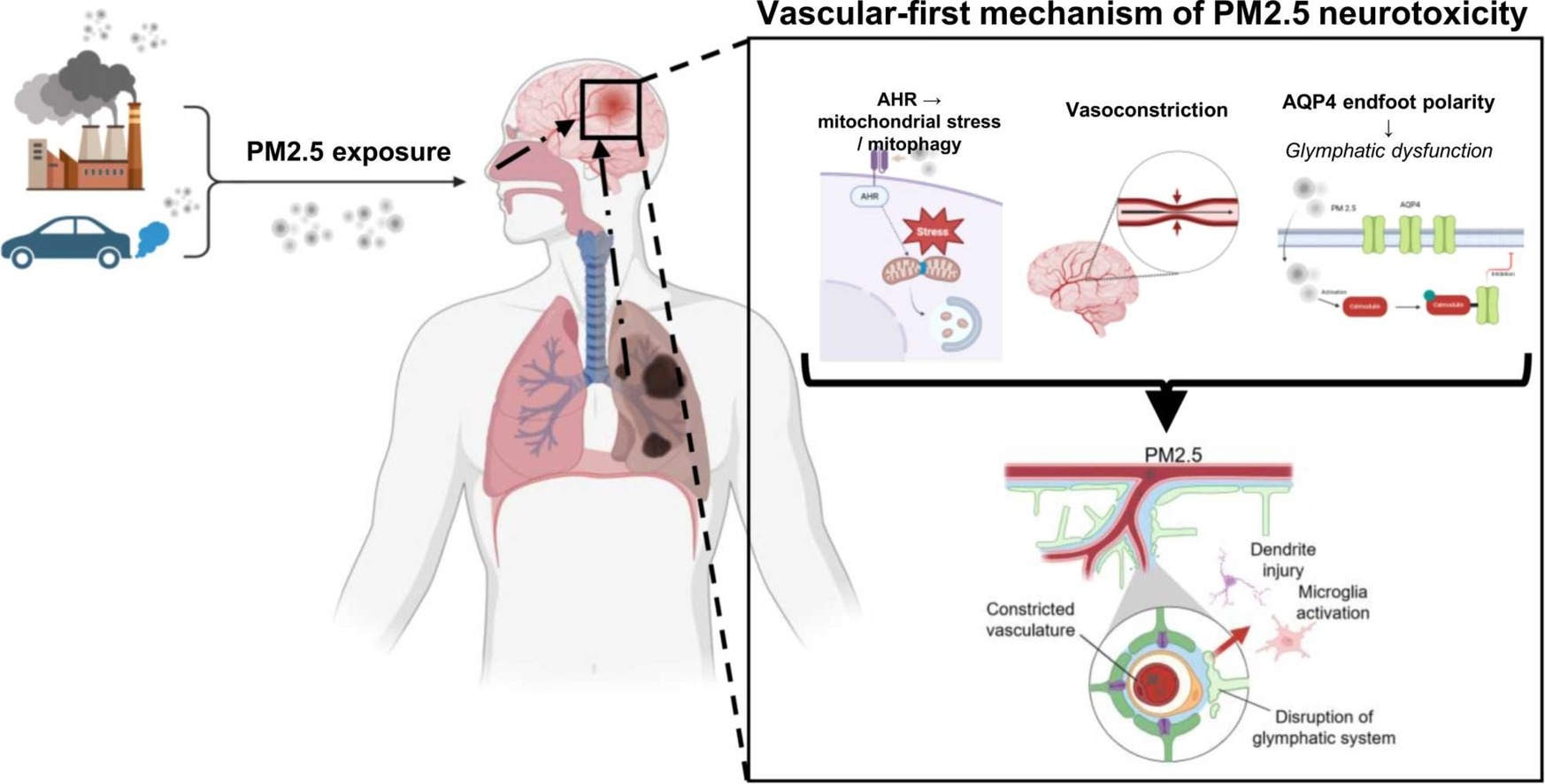
Abstract Particulate matter (PM2.5) is a pervasive air pollutant increasingly linked to neurovascular dysfunction, but the cellular mechanisms remain unclear. We identify the aryl hydrocarbon receptor (AHR) as a key endothelial sensor of PM2.5 that initiates mitochondrial stress and Parkin-dependent mitophagy. Across complementary inhalation and intratracheal instillation models, integrated with spatial transcriptomics, high-resolution imaging, and in vitro assays, endothelial mitochondrial injury and oxidative stress constricted cerebral vessels and reduced perfusion. These vascular insults propagated to astrocytes, where calmodulin-dependent mislocalization of aquaporin-4 (AQP4) disrupted perivascular water homeostasis and glymphatic exchange. System-level consequences included dendritic degeneration, microglial activation, and hypoxic stress, with the hippocampus showing heightened vulnerability. Spatial transcriptomics resolved region- and cell type–specific injury and synaptic remodeling that bulk RNA sequencing failed to detect, while endothelial readouts evidenced canonical AHR engagement. Collectively, the data establish endothelial mitophagy as a metabolic checkpoint linking environmental particulate exposure to gliovascular dysfunction and impaired brain clearance, and nominate AHR signaling as a potential therapeutic target to preserve brain homeostasis under chronic air pollution. These mechanistic links provide a framework for interpreting epidemiological associations between PM2.5 exposure and neurodegenerative disease risk.
Researchers from UNIST, in collaboration with the Korea Brain Research Institute (KBRI) and the Korea Institute of Toxicology (KIT), have identified the neurotoxic mechanism by which PM2.5—fine airborne particulate matter—damages cerebrovascular health and adversely impacts brain function. This breakthrough was a collaborative effort led by Professor Kyemyung Park from the Graduate School of Health and Science (HST) at UNIST, with significant contributions from Dr. Do-Geun Kim of the Dementia Research Group at KBRI and Dr. Kyuhong Lee of KIT.
Although PM2.5 has long been associated with respiratory and cardiovascular issues, its direct effects on the brain and the underlying pathways have remained largely unclear. To address this, the research focused on endothelial cells lining brain blood vessels, which are essential for maintaining a healthy neural environment.
The study revealed that PM2.5 activates the aryl hydrocarbon receptor (AHR) within cerebrovascular endothelial cells, leading to mitochondrial dysfunction—the cell’s energy-producing organelles. This mitochondrial impairment reduces cellular energy production, impairing blood vessel regulation and ultimately decreasing blood flow to the brain.
Furthermore, disruptions were observed in the communication between blood vessels and neighboring cells such as astrocytes. These alterations can interfere with the glymphatic system, the brain’s waste clearance pathway, potentially compromising overall brain homeostasis.
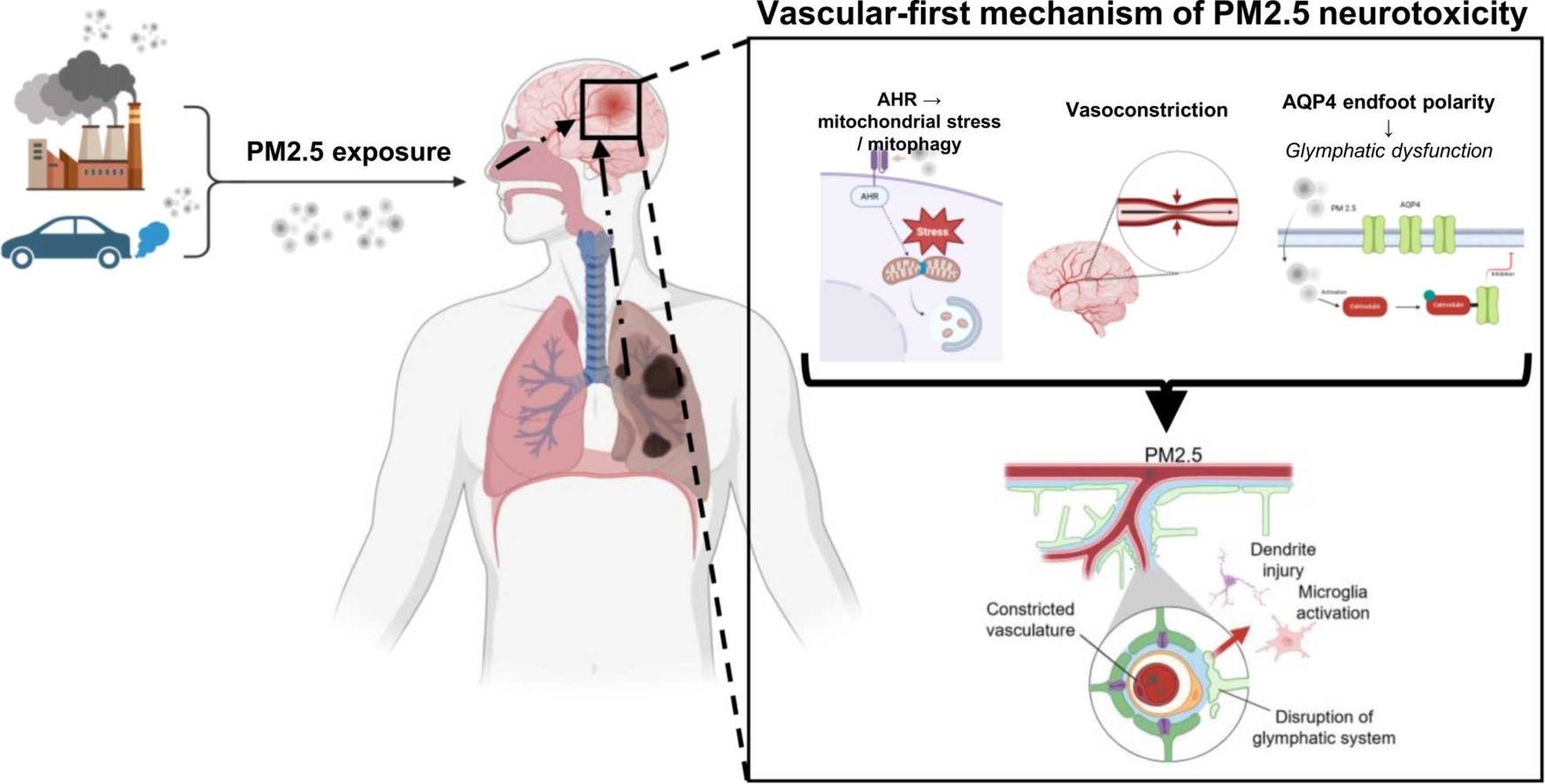 Figure 1. Schematic image, illustrating the vascular-first mechanism of PM2.5 neurotoxicity.
The hippocampus—a region vital for memory and learning—was particularly susceptible. Given its key role in neurodegenerative diseases like Alzheimer's, these findings provide a scientific basis for understanding how environmental pollutants may contribute to long-term cognitive decline.
This research offers a comprehensive view of how PM2.5 exposure can trigger a cascade of effects, starting with cerebrovascular impairment and extending to broader changes in the brain environment.
Professor Kyemyung Park of UNIST remarked, "We identified how PM2.5 impairs energy metabolism in vascular cells, leading to systemic changes in brain function. This provides a foundational link between environmental pollution and neurodegenerative processes."
Dr. Do-Geun Kim from KBRI, co-corresponding author, stated, "This study demonstrates that PM2.5 can influence brain health by disrupting cerebrovascular function, revealing a potential pathway through which environmental pollutants impact cognition."
Dr. Kyuhong Lee from KIT, another co-corresponding author, added, "By accurately simulating the toxicological properties of Korean ambient PM, our findings closely reflect real-world exposure risks, offering valuable insights for environmental health policies and future research."
The findings of this research have been published online in the Journal of Hazardous Materials on January 27, 2026. This study has been supported by the National Research Foundation of Korea (NRF), the Ministry of Science and ICT (MSIT), the Korea Brain Research Institute (KBRI), the Korea Institute of Toxicology (KIT), and initiatives, including the Bio-Medical Technology Development Program and Early-Career Research Project.
Journal Reference
Kyu-Sung Kim, Dong Im Kim, Sungsu Hwang, et al., "PM2.5 impairs gliovascular coupling via endothelial AHR–mitochondrial signaling in mice," J. Hazard. Mater., (2026).
Related Links
Related Photo